
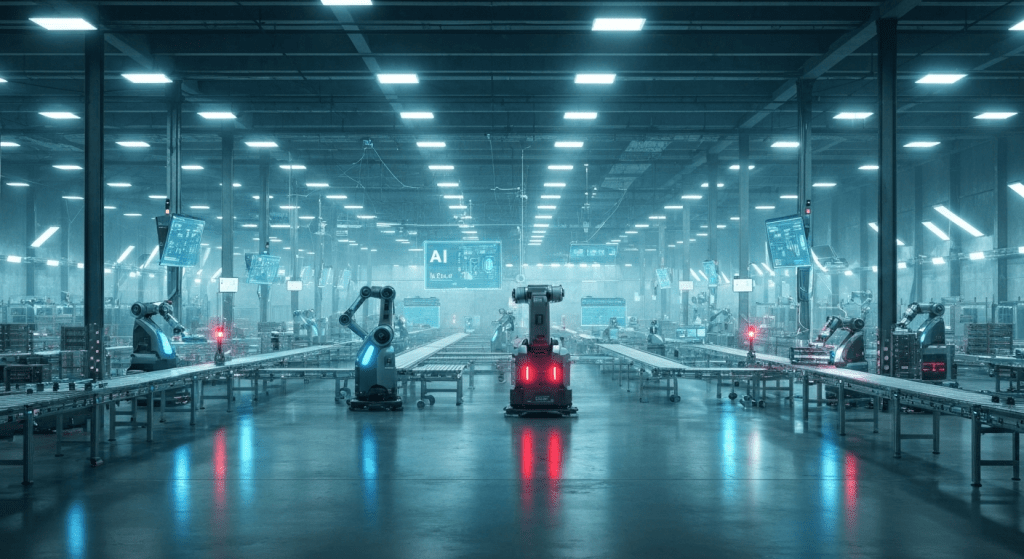
Key Highlights
- Warehouse automation, including robotics and automation in warehouses, boosts productivity and order processing speed by optimizing tasks.
- Artificial intelligence is revolutionizing inventory management and order fulfillment, leading to greater accuracy and efficiency in warehouses.
- The Internet of Things (IoT) enables real-time monitoring of assets and predictive maintenance for equipment, reducing downtime.
- Cloud-based platforms and data analytics are crucial for measuring the return on investment (ROI) of new technology.
- The integration of these technologies is transforming supply chain management, offering significant cost savings and a competitive edge.
Introduction
Welcome to the new era of warehouse operations! As e-commerce continues to grow, the pressure for faster delivery and perfectly stocked shelves has never been higher. To meet these demands, warehouses and distribution centers are embracing innovative solutions. Technologies like artificial intelligence (AI), automation, and the Internet of Things (IoT) are no longer futuristic concepts but practical tools. These advancements are transforming warehouse management, boosting supply chain efficiency, and helping businesses deliver exceptional customer satisfaction.
Key Facility Technologies Reshaping Warehousing Operations
The modern warehouse floor is becoming a hub of intelligent facility technologies. We are seeing a powerful merger of information technology (IT) and operational technology (OT), which is completely changing how warehouse operations are managed. This convergence bridges the gap between the digital and physical worlds, creating smarter, more responsive environments.
In leading fulfillment centers, this is already a reality. You can see new technologies like sensors on equipment that predict maintenance needs and robotic picking systems that work with real-time inventory data. These automation solutions are not just about speed; they are about creating a more accurate, efficient, and interconnected warehouse. The following sections will explore some of these key technologies in more detail.
AI Warehouse Technology Adoption Trends
The adoption of artificial intelligence in warehouse management is one of the most significant warehouse trends today. Businesses are increasingly turning to AI to gain a competitive advantage. The primary use of AI is to make processes more efficient and accurate, from optimizing how products are stored to forecasting future demand. In a place like Singapore, a global logistics hub, these trends are especially prominent as companies strive to maintain their edge.
AI can process vast amounts of data at incredible speeds. This capability is used to predict shipment lead times, identify orders at risk of being late, and compare inventory levels with incoming shipments. The use of AI helps warehouse managers make smarter, data-driven decisions that improve overall performance and responsiveness to market changes.
Looking ahead, future trends point toward even deeper integration of AI. We can expect AI to play an even bigger role in inventory management, demand forecasting, and overall warehouse optimization. As AI models learn and become smarter over time, they will unlock new levels of productivity and efficiency for businesses of all sizes.
Robotics, Autonomous Mobile Robots, and Automation Technologies
Robotics and automation in warehouses are fundamentally changing how routine tasks are performed. Autonomous Mobile Robots (AMRs) are at the forefront of this transformation. Unlike traditional automated guided vehicles, AMRs use AI to navigate the warehouse dynamically, choosing the best path rather than following a preprogrammed route. This intelligence allows them to move items with greater speed, ease, and accuracy than manual methods.
These technologies dramatically improve operational efficiency by taking over repetitive and physically demanding jobs. By automating these tasks, you can redirect your warehouse workers to more strategic and value-added activities. This not only boosts productivity but also enhances workplace safety, as robots can handle tasks that might be difficult or unsafe for humans.
The roles of robotics and automation technologies are diverse and impactful. Key applications include:
- Picking and Sorting: Robots can identify, pick, and sort items with high precision, reducing human error.
- Transporting Goods: AMRs efficiently move inventory from storage to packing stations without human intervention.
- Inventory Management: Automated systems can scan items and update inventory records in real time.
Integration of IoT Devices and RFID Tags in Warehouses
The Internet of Things (IoT) is making warehouses smarter by connecting physical objects to a central network. Through IoT in warehousing, devices like sensors and RFID tags provide real-time visibility into your operations. This constant stream of data allows for more precise control over inventory and equipment, making your entire supply chain more transparent.
RFID technology is particularly transformative for data capture. Instead of manually scanning barcodes, RFID tags allow you to scan multiple items at once without a direct line of sight. This automates inventory updates and dramatically reduces the time and labor needed for stock counts. IoT sensors further enhance this by monitoring environmental conditions, such as temperature and humidity, which is critical for perishable goods.
This integration empowers real-time inventory tracking and optimizes various processes. Here’s how it contributes:
- Automated Data Capture: RFID and IoT sensors automatically collect and transmit data, eliminating manual entry and reducing errors.
- Real-Time Visibility: Track the exact location and status of goods as they move through the warehouse.
- Predictive Maintenance: IoT sensors on equipment monitor performance and detect potential failures before they happen.
AI-Powered Warehouse Management Systems (WMS)
Harnessing the capabilities of AI within warehouse management systems (WMS) significantly enhances operational efficiency and accuracy. These innovative solutions streamline inventory management by utilizing real-time data analytics to optimize stock levels and minimize human error. As a result, organizations can achieve faster order fulfillment and improved customer satisfaction. Implementing machine learning algorithms helps predict demand patterns, ensuring the entire supply chain runs smoothly. Additionally, AI-powered WMS can integrate with IoT sensors for better visibility and control over warehouse operations, paving the way for a truly smart warehouse.
Advanced Data Analytics for Inventory Control
Advanced data analytics is a game-changer for inventory management. By harnessing the power of AI, you can move from reactive to proactive inventory control. AI-driven systems analyze vast amounts of data in real time to give you a precise, up-to-the-minute count of your stock levels. This eliminates the guesswork often associated with manual inventory tracking.
This real-time visibility is crucial for maintaining optimal inventory. The system can automatically detect and notify managers about out-of-stock items, helping to prevent lost sales and customer dissatisfaction. It also helps you avoid overstocking, which ties up capital and warehouse space. This level of precision significantly boosts operational efficiency.
Ultimately, integrating data analytics into your inventory strategy allows for smarter decision-making. You can optimize inventory turnover, reduce carrying costs, and ensure you have the right products available at the right time. This leads to faster fulfillment, fewer errors, and a more resilient supply chain that can adapt quickly to market changes.
Machine Learning Algorithms for Demand Forecasting
Machine learning (ML), a subset of AI, is revolutionizing demand forecasting. Instead of relying solely on past sales figures, ML algorithms analyze historical data to identify complex demand patterns and trends that humans might miss. This allows for much more accurate predictions of future customer demand.
These algorithms are particularly effective at learning seasonal demand patterns. For example, an ML-powered system can predict spikes in demand for specific items during back-to-school season or holidays like Christmas. By anticipating these fluctuations, your warehouse management team can ensure the right type and quantity of products are in stock, preventing both stockouts and costly overstock situations.
This intelligent forecasting helps you optimize inventory levels and plan warehouse operations more effectively. By knowing what customers are likely to buy, you can make better decisions about procurement, storage, and labor allocation. This proactive approach helps you respond to market shifts with agility and confidence, ensuring your warehouse is always prepared.
Predictive Maintenance and Process Optimization
Predictive maintenance is a powerful strategy that uses AI to identify equipment issues before they cause a breakdown. By placing sensors on machinery and robots, you can monitor factors like heat, vibration, and throughput in real time. AI algorithms then analyze this data to detect anomalies that signal a potential failure.
This proactive approach allows you to schedule maintenance before a machine stops working, which minimizes downtime and keeps your operations running smoothly. Catching problems early can also significantly reduce repair costs and extend the lifespan of your valuable equipment. This contributes directly to improved operational efficiency and output.
Beyond just maintenance, AI-driven process optimization also enhances energy efficiency and sustainability. By analyzing activity in the warehouse, the system can make smart adjustments. Key benefits include:
- Optimized Resource Use: Adjusts lighting and temperature based on real-time activity, lowering energy consumption.
- Reduced Waste: Better inventory management and process flows help minimize waste and improve overall sustainability.
Impact of 5G Logistics Technology on Automated Warehouses
The arrival of 5G technology is set to create another wave of transformation in logistics and automated warehouses. With its ultra-fast speeds and incredibly low latency, 5G will provide the robust connectivity needed to power the next generation of warehouse automation. This technology will enable almost instantaneous communication between devices, robots, and systems.
This enhanced connectivity will support more complex and responsive automation, leading to faster processing, better accuracy, and ultimately, faster delivery times. For a logistics hub like Singapore, where speed and efficiency are paramount, 5G will be a critical enabler for maintaining a competitive edge. Let’s explore how this will specifically benefit warehouse operations.
Enabling Seamless Communication Across Devices
5G technology is the key to unlocking seamless communication in a truly smart warehouse. Its ability to handle massive numbers of connections simultaneously without a drop in performance means that all your IoT devices, from sensors to robots, can interact in real time without delays. This creates a hyperconnected environment where information flows freely and instantly.
Imagine a warehouse where an AMR, an automated sorting system, and your WMS are all communicating without a hint of lag. This level of connectivity allows for highly coordinated actions and instant decision-making. If a sensor detects an issue or an order is updated, the entire system can react immediately to optimize the workflow.
This enhanced communication extends across the entire supply chain management ecosystem. With 5G, you can achieve better integration with suppliers, carriers, and customers, providing end-to-end visibility and enabling more collaborative and responsive operations. This interconnectedness is fundamental to building the agile and efficient supply chains of the future.
Faster Data Processing for Instant Decision Making
One of the most significant advantages of 5G is its extremely low latency, which means there is virtually no delay between when data is sent and when it is received. This capability is critical for applications that require real-time data processing and instant responses. In a fast-paced warehouse environment, even milliseconds can make a difference.
Faster data processing allows for more accurate and responsive automation. For example, computer vision systems on robots can identify and react to obstacles instantly, improving safety and efficiency. It also enables quicker verification of orders and inventory, which enhances order accuracy and reduces the risk of errors.
Ultimately, this speed translates directly to faster order fulfillment. When every step of the process—from picking and packing to shipping—is powered by real-time data and instant communication, you can significantly reduce the time it takes to get an order out the door. This helps you meet growing customer expectations for rapid delivery.
Use Cases of 5G Technology in Singaporean Logistics
While 5G is still emerging, we can already see its potential by looking at existing use cases of advanced automation in Singaporean logistics. Companies are already implementing new technologies that will be further enhanced by 5G’s capabilities. These examples show how Singapore is at the forefront of transforming supply chain management.
Firms like DHL and SingPost have invested heavily in automated hubs that serve as a blueprint for the future. These facilities leverage robotics, AI, and IoT to achieve remarkable efficiency gains. With 5G, the communication between these systems will become even more fluid and powerful, enabling even greater levels of automation and real-time control.
Here are a few examples of smart logistics in action in Singapore:
| Company | Technology Integration |
|---|---|
| DHL | Deployed a fully automated warehouse with AGVs, robotic arms, and IoT tracking systems to improve efficiency. |
| SingPost | Operates an advanced logistics hub with AI-driven sorting systems and IoT monitoring for seamless parcel handling. |
| Ninja Van | Uses AI and IoT to optimize last-mile delivery routes and manage inventory in real time for timely customer service. |
The Rising Demand for Smart Logistics Solutions
The demand for smart logistics is rising rapidly, driven by several key factors. On one hand, businesses face pressures like rising labor costs and limited land for expansion, especially in dense urban areas like Singapore. On the other hand, consumer demand for faster delivery, real-time tracking, and perfect order accuracy continues to grow. These challenges make traditional warehousing methods unsustainable.
To thrive in this environment, companies must adopt innovative solutions that streamline operations and enhance efficiency. Smart logistics, powered by AI, IoT, and automation, provides the tools to meet these modern demands. Investing in these technologies is no longer just about cutting costs; it’s about gaining a critical competitive edge.
By embracing smart logistics, you can transform your supply chain management from a cost center into a strategic asset. These solutions allow you to offer superior customer service, adapt quickly to market changes, and build a more resilient and scalable operation. In today’s competitive landscape, failing to innovate means falling behind.
Warehouse ROI Calculation and Business Benefits
Investing in automation is a significant decision, and understanding the potential return on investment (ROI) is crucial. Calculating warehouse ROI involves more than just looking at the initial cost of automation investments. You need to assess the long-term cost savings and productivity improvements that these technologies will bring to your operation.
A thorough ROI analysis helps justify the expenditure and provides clear metrics for success. Key factors in this calculation include reduced labor needs, lower operational costs, and increased throughput. However, the business benefits often extend beyond simple numbers, contributing to a stronger, more competitive organization. The following sections will break down how to measure these benefits.
Measuring Cost Savings and Productivity Improvements
Measuring the financial impact of automation begins with identifying areas where you can achieve significant cost savings. One of the most direct savings comes from reducing the reliance on manual processes. Automation can handle repetitive tasks faster and more accurately than humans, which lowers labor costs and minimizes the expenses associated with human error.
Productivity improvements are another key metric. Automation can dramatically increase the number of orders processed per hour, allowing you to scale your operations without a proportional increase in headcount. This enhanced productivity means shorter lead times for customers and improved service levels, which can lead to higher customer retention and satisfaction.
To quantify these benefits, focus on tracking specific key performance indicators (KPIs) before and after implementation. Consider measuring:
- Labor Costs: Compare payroll expenses for tasks that are now automated.
- Order Fulfillment Time: Track the reduction in the time it takes from order receipt to shipment.
- Accuracy Rates: Measure the decrease in picking and shipping errors.
- Throughput: Monitor the increase in the volume of items or orders processed.
Evaluating the Value of Automation Investments
While cost savings and productivity are tangible, the full value of a warehouse automation investment includes broader business benefits. One of the most important is gaining a sustainable competitive advantage. In a market where customers expect speed and perfection, an automated warehouse allows you to deliver a superior experience that sets you apart from competitors.
Another crucial benefit is increased resilience against supply chain disruptions. Automated systems can adapt more quickly to sudden changes in demand or labor availability. This agility helps your business navigate unforeseen challenges, from a sudden spike in orders to a shortage of workers, ensuring operational continuity when it matters most.
Ultimately, evaluating your investment requires a long-term strategic view. Although the initial cost can be high, think about how automation positions your company for future growth. It provides the scalability to expand your operations, enter new markets, and adapt to evolving customer expectations, making it a foundational investment in your company’s future.
Digital Platforms and Smart Logistics Ecosystems
The future of smart logistics lies in creating connected ecosystems, and digital platforms are the foundation of this vision. These platforms act as a central hub, connecting all supply chain stakeholders—from suppliers and manufacturers to distributors and customers—in one seamless network. This integration breaks down silos and fosters real-time communication and collaboration.
By connecting everyone on a single platform, you can achieve unprecedented visibility and coordination across the entire supply chain. This enables more effective planning, smarter decision-making, and the formation of strategic partnerships. Let’s explore how these platforms, especially cloud-based WMS, are enabling this new era of smart logistics.
Role of Cloud-Based WMS and Optimization Tools
Cloud-based Warehouse Management Systems (WMS) are at the heart of modern digital platforms. Unlike traditional on-premise software, a cloud-based WMS is accessible from anywhere, providing real-time visibility into your warehouse management operations. This allows you to monitor inventory, track orders, and manage labor remotely, offering unmatched flexibility.
These systems are powerful optimization tools because they can harness big data and AI. They collect and analyze information from across your operations to provide actionable insights. For instance, they can recommend optimal picking routes, suggest better inventory placement, and forecast labor needs, all of which contribute to a more efficient and cost-effective warehouse.
One of the biggest advantages of cloud-based solutions is their scalability and continuous innovation. As your business grows, the system can easily scale with you. Furthermore, providers regularly release updates with the latest technologies, like new AI capabilities, ensuring your WMS never becomes outdated and you always have access to cutting-edge tools.
Connecting Supply Chain Stakeholders Via Digital Platforms
Digital platforms are transforming how supply chain stakeholders interact. By providing a single source of truth, these platforms eliminate the communication gaps that often exist between different partners. Everyone from the raw material supplier to the final-mile delivery driver can access the same real-time information, leading to better coordination and fewer misunderstandings.
This enhanced communication is vital for creating a truly integrated supply chain. When your suppliers have visibility into your inventory levels, they can better plan their production and deliveries. When your distribution centers are connected with your transportation partners, you can optimize shipping schedules and reduce transit times.
This collaborative environment fosters stronger strategic partnerships. When stakeholders can work together seamlessly, they can identify opportunities for mutual improvement and innovation. Key benefits of connecting on a digital platform include:
- Enhanced Visibility: All partners can see the status of orders and inventory in real time.
- Improved Collaboration: Enables joint planning and problem-solving across the supply chain.
Supporting Sustainability and Green Logistics
Beyond efficiency and cost savings, warehouse automation also plays a crucial role in supporting sustainability. Smart technologies provide the tools to implement green logistics best practices and reduce your operation’s environmental footprint. This is becoming increasingly important as consumers and regulators place a greater emphasis on corporate responsibility.
One of the most direct ways automation improves energy efficiency is through smart building controls. AI-powered systems can manage lighting, heating, and cooling based on real-time activity, dimming lights in unused areas or adjusting temperatures during off-peak hours. This simple optimization can lead to significant reductions in electricity consumption.
Furthermore, the process efficiencies gained from automation contribute to sustainability. Optimized delivery routes reduce fuel consumption and transportation emissions. Better inventory management minimizes waste from spoilage or obsolete products. By integrating these practices into your supply chain management, you not only help the planet but also enhance your brand reputation and bottom line.
Conclusion
In summary, the integration of AI, automation, and IoT in warehouse operations is revolutionizing supply chain efficiency. These technologies not only streamline processes but also enhance data analytics, predictive maintenance, and communication across devices. As businesses increasingly adopt these innovations, they can expect significant cost savings and productivity improvements, ultimately leading to a higher return on investment. Embracing these advancements will help organizations stay competitive in a rapidly evolving market. If you’re eager to learn more about how these technologies can transform your warehouse operations, get in touch with our team today!
Frequently Asked Questions
What are the latest trends in AI warehouse technology in Singapore?
In Singapore, key warehouse trends in artificial intelligence include the use of autonomous mobile robots for fulfillment, advanced data analytics for demand forecasting, and predictive maintenance for equipment. These innovations in warehouse management are helping companies boost efficiency and maintain a competitive edge in the global logistics market.
How do RFID tags and sensors contribute to warehouse automation?
RFID technology and sensors are crucial for warehouse automation as they enable automated, real-time data capture. They track inventory movement without manual scanning, providing an accurate, up-to-the-minute view of stock levels. This eliminates human error, speeds up processes, and significantly improves overall operational efficiency.
What factors influence warehouse ROI calculation for Singaporean businesses?
For Singaporean businesses, warehouse ROI calculation is influenced by the initial cost of automation investments, projected savings in operational costs like labor, and measurable gains in productivity. Other business benefits, such as improved accuracy, faster fulfillment, and enhanced customer satisfaction, are also critical factors in evaluating the total return.
