
Key Highlights
Here’s a quick look at what we’ll cover in FM Lifecycle Planning:
- Effective facility management is crucial for protecting your building’s value over its entire lifespan.
- Strategic asset management in facilities management helps you make informed decisions to optimize performance.
- We explore how asset lifecycle management for building owners can lead to significant facilities management cost optimization over 10 years.
- Singapore’s push for sustainability, supported by the Green Mark certification, is transforming the built environment.
- Data-driven approaches and smart technologies are revolutionizing how modern assets are maintained and managed.
Introduction
Welcome to the world of long-term asset planning! In the dynamic facilities management industry, simply reacting to problems is no longer enough. To truly protect and enhance the value of your assets over a decade or more, you need a strategic plan. This is where facility management lifecycle planning (FM Lifecycle Planning) comes in. It’s a forward-thinking approach that helps you manage your property from acquisition to disposal, ensuring every decision contributes to the long-term health and value of your built environment.
Evolution of FM Lifecycle Planning in Singapore
The facility management landscape in Singapore has undergone a remarkable transformation, mirroring the nation’s own journey. What started as a basic, reactive approach has evolved into a sophisticated, proactive discipline. This shift is reshaping the entire facilities management industry and how stakeholders interact with the built environment.
A key driver of this change is digital transformation. The adoption of smart facilities management, powered by data and technology, is now at the forefront. This evolution promises to redefine how we manage, maintain, and optimize buildings for a smarter, more sustainable future. The following sections explore how these historical shifts and new standards are shaping modern practices.
Historical Shifts and Modern Innovations
Looking back, the journey of facility management in Singapore began with foundational, centralized efforts to address housing needs. The approach was primarily reactive, with maintenance teams responding to breakdowns as they occurred. There was very little data collection or forward-planning involved in these early stages.
The turning point came with decentralization and crises like the 2003 SARS outbreak, which forced a complete rethink of hygiene protocols, air quality management, and emergency preparedness. This event highlighted the inadequacy of reactive FM and pushed the industry toward more proactive, strategic methods. It became clear that to ensure safety and efficiency, a change was necessary.
Today, modern innovations define the industry. We’ve moved from manual audits to continuous, real-time monitoring through smart facilities management. Digital transformation is no longer a buzzword but an essential tool, with technologies like Building Information Modeling (BIM) and IoT sensors enabling predictive maintenance and data-driven decision-making from the earliest design stages.
Influence of Regulatory and Industry Standards
Government initiatives and industry standards have been instrumental in shaping modern facility management in Singapore. The launch of the Building and Construction Authority’s (BCA) Green Mark certification scheme in 2005 fundamentally altered the industry’s focus. It shifted the goal from simply keeping buildings operational to optimizing performance and reducing environmental impact.
The Green Mark scheme established clear regulatory standards for energy efficiency, water conservation, and indoor environmental quality. Achieving Green Mark certification became a key objective for building owners, pushing facility managers to adopt more sustainable practices. This focus on environmental compliance has become a cornerstone of the industry.
As a result, facility management strategies are now deeply intertwined with sustainability goals. The masterplan has evolved to include ambitious targets for greening existing buildings, driving a continuous cycle of improvement and innovation. This regulatory pressure ensures that FM practices not only meet operational needs but also contribute to Singapore’s broader sustainability vision.
Key Stages in the FM Lifecycle for Singaporean Assets
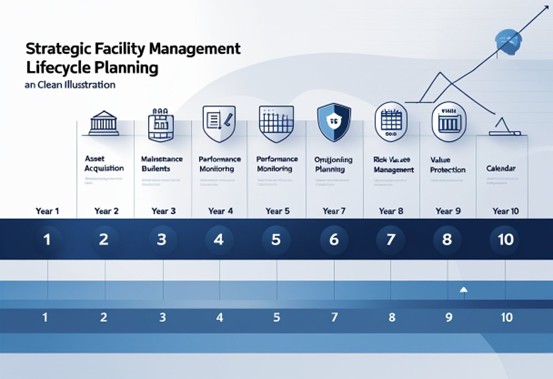
Effective asset lifecycle management for building owners involves a series of distinct phases that guide an asset from concept to retirement. For any property in Singapore’s built environment, this journey begins long before the doors open. The key stages include initial planning, design, procurement, construction, and finally, the long-term phase of operations and maintenance.
Understanding each stage is crucial for making smart, cost-effective decisions. By approaching the lifecycle holistically, you can prevent costly errors, streamline processes, and ensure a smooth transition from construction to occupancy. Let’s look closer at how each of these early and operational stages contributes to maximizing your asset’s value.
Initial Planning and Acquisition
The foundation of successful facility management is laid during the initial planning and acquisition phase. This is where you define the project’s goals, scope, and budget. It involves extensive coordination between all stakeholders, including architects, engineers, and future building operators, to ensure everyone’s needs are aligned from day one.
A critical component of this stage is the procurement of materials and services. Making the right choices here can have a lasting impact on future operational costs. For instance, selecting durable, energy-efficient materials might have a higher upfront cost but can lead to significant savings over the building’s lifespan. This foresight is a key part of strategic asset management in facilities management.
Modern tools like Building Information Modeling (BIM) have revolutionized this phase. By creating a digital representation of the building, you can identify potential design flaws and clashes before construction even begins. This digital-first approach ensures a smoother building process and sets the stage for efficient long-term management.
Operations, Maintenance, and Upgrades
Once a building is operational, the focus shifts to ensuring it runs smoothly and efficiently. This operations and maintenance phase is the longest and often most costly part of the asset lifecycle. The primary goal is to balance day-to-day tasks with long-term asset health to minimize downtime and control maintenance costs.
A successful strategy involves integrating preventive and predictive maintenance strategies. Instead of waiting for equipment to fail (corrective maintenance), a preventive approach involves scheduled inspections and servicing to keep systems in optimal condition. This reduces the likelihood of unexpected breakdowns and costly emergency repairs.
Predictive maintenance takes this a step further by using data and technology to forecast potential failures before they occur. By analyzing performance data from systems like HVAC units, you can schedule maintenance precisely when needed, extending equipment lifespan and ensuring uninterrupted operations. This proactive approach is fundamental to modern facility management.
Strategic Asset Management Techniques
How can you get the most out of your building assets? The answer lies in applying strategic asset management techniques. This approach moves beyond simple maintenance and focuses on maximizing asset performance and operational efficiency throughout the entire lifecycle. It’s about making smart, data-informed decisions that enhance value and reduce long-term costs.
These strategies are delivered through comprehensive facilities management services that cover everything from financial analysis to performance tracking. By adopting these techniques, you can turn your facility from a cost center into a value-driver. Let’s explore some of the key methods used to achieve this, including lifecycle cost analysis, data-driven decision-making, and proactive budget planning.
Lifecycle Cost Analysis to Maximize Value
Lifecycle cost analysis (LCCA) is a powerful financial tool used in asset lifecycle management. It helps you look beyond the initial purchase price and consider all costs associated with an asset over its entire life, including installation, energy use, maintenance costs, and eventual disposal. This provides a true picture of an asset’s total cost of ownership.
By applying LCCA, you can make more informed decisions during procurement and budget planning. For example, a cheaper air conditioning unit might seem attractive initially, but if it consumes more energy and requires frequent repairs, it could cost you more over a decade. LCCA allows for facilities management cost optimization over 10 years by justifying investments in higher-quality, more efficient systems that offer better long-term value.
This method is essential for planning and budgeting for the replacement of aging assets. A comprehensive LCCA program sets an appropriate replacement schedule, allowing you to take a preventive approach and avoid the high costs and disruptions associated with system failures.
| Cost Factor | Traditional Approach | LCCA-Informed Approach |
| Initial Purchase Cost | Low | Higher |
| Energy Costs | High | Low |
| Annual Maintenance Costs | High (Reactive Repairs) | Low (Preventive/Predictive) |
| Asset Lifespan | Shorter | Longer |
| 10-Year Total Cost | Higher | Lower |
Data-Driven Decision Making and Performance Tracking
In today’s digital world, data is your most valuable asset for optimizing building operations. A data-driven approach to facility management involves systematic data collection from various sources, including IoT sensors, building automation systems, and even occupant feedback. This information provides deep insights into how your facility is truly performing.
This real-time performance tracking allows you to move from guesswork to informed action. For example, sensors can monitor energy consumption, occupancy levels, and equipment health, providing a clear picture of operational efficiency. Are certain areas being over-cooled? Is a piece of machinery showing signs of stress? Data gives you the answers.
Harnessing this data with artificial intelligence (AI) and machine learning algorithms enables predictive maintenance. Instead of waiting for an alert, the system can predict a potential failure and automatically schedule a work order. This proactive strategy not only prevents breakdowns but also streamlines maintenance workflows, cuts costs, and boosts overall efficiency.
Budget Planning
Effective budget planning is the backbone of strategic facility management. It ensures you have the financial resources to maintain your assets properly and achieve your long-term goals. Without a solid budget, even the best-laid plans can fall short, leading to deferred maintenance, increased downtime, and declining asset value.
A forward-thinking budget is not just about covering day-to-day expenses. It should be a strategic financial plan informed by lifecycle cost analysis and performance data. This allows you to justify expenditures for upgrades and replacements that will deliver long-term savings and contribute to maximizing asset performance.
When developing your FM budget, it’s crucial to allocate funds strategically to support key objectives. Key considerations for your budget planning should include:
- Preventive Maintenance: Earmark funds for scheduled maintenance to reduce unexpected, costly repairs.
- Capital Replacements: Use LCCA data to plan and save for the eventual replacement of major systems like HVAC and elevators.
- Technology Upgrades: Invest in smart building technologies that improve efficiency and provide valuable data.
- Contingency Funds: Set aside a reserve for unforeseen emergencies to avoid disrupting planned activities.
Sustainability and Government Initiatives in FM Lifecycle Planning
Sustainability is no longer an option—it’s a necessity in modern facility management. Integrating green practices into your lifecycle plan not only benefits the environment but also delivers tangible economic advantages, such as lower energy and water bills. For building operations in Singapore, sustainability is a core component of responsible asset management.
This focus is strongly supported by government initiatives designed to promote environmental compliance and resource conservation. Programs like the BCA Green Mark scheme provide a clear framework and incentives for building owners to adopt sustainable practices. The following sections will explain how these certifications and the support from local agencies can guide your journey toward a greener, more efficient facility.
Green Building Certifications and Environmental Compliance
Achieving a green building certification, such as Singapore’s renowned Green Mark certification, is a primary way to demonstrate your commitment to sustainability. These certifications aren’t just about earning a plaque; they provide a comprehensive framework for improving the environmental performance of your building operations.
The requirements for certification push facility managers to focus on key areas of environmental compliance. This includes real-time energy monitoring, implementing water-saving technologies, developing robust waste management programs, and ensuring high indoor environmental quality for occupants. Adhering to these standards helps you reduce your building’s carbon footprint.
Ultimately, integrating Green Mark principles into your FM lifecycle plan leads to more than just compliance. It drives a culture of continuous improvement, resulting in significant long-term savings on utilities, enhanced occupant well-being, and increased asset value. It positions your property as a leader in sustainability within the built environment.
Support from Singaporean Agencies and FM Consultancy Services
Navigating the complexities of FM lifecycle planning can be challenging, but you don’t have to do it alone. The facilities management industry in Singapore offers a wealth of support, from government agencies to expert consultancy services, to help stakeholders at every stage.
Firms specializing in FM, such as Array Engineering & Facilities Management, provide tailored consultancy services to help you develop and implement a strategic lifecycle plan. These experts bring a deep understanding of building systems, maintenance principles, and financial planning, ensuring your strategy is both effective and achievable. They can conduct detailed assessments and develop comprehensive LCCA programs to guide your long-term budgeting.
Whether you need help with initial planning or ongoing optimization, professional support can make all the difference. Available services often include:
- Developing a full Lifecycle Cost Analysis (LCCA) program.
- Conducting site observations and assessments to determine the remaining lifespan of assets.
- Assisting with budget justification for system replacements.
- Providing training and guidance to in-house teams on best practices.
Conclusion
In summary, effective FM lifecycle planning is essential for strategic asset protection and value optimization in Singapore. By understanding the key stages, implementing data-driven decision-making, and adhering to sustainability initiatives, organizations can maximize their assets’ potential while meeting regulatory standards. As the landscape of facilities management evolves, staying informed and proactive is vital for achieving long-term success. If you have any questions or need assistance with your FM lifecycle planning, get in touch! Your journey towards optimized asset management starts today.
Frequently Asked Questions
What are the core process components for effective FM lifecycle planning in Singapore?
Effective facility management lifecycle planning for building owners in Singapore integrates several key components. It starts with strategic planning and procurement, moves to data-driven operations using smart facilities management, incorporates lifecycle cost analysis for financial foresight, and ensures sustainable practices are maintained throughout the built environment’s lifespan.
How do Singapore companies optimize asset returns using FM lifecycle management?
Companies in Singapore optimize asset returns through strategic asset management in facilities management. They use lifecycle cost analysis for long-term cost optimization, leverage data-driven decision making to boost operational efficiency, and implement predictive maintenance strategies for maximizing asset performance and lifespan, ultimately increasing the return on their investment.
What consultancy services help businesses with FM planning and asset protection?
In the facilities management industry, consultancy services from firms like Array Engineering offer expert guidance on asset protection and strategic planning. They assist stakeholders by developing lifecycle cost analyses, assessing asset conditions, and creating data-driven maintenance strategies to help businesses manage their properties effectively and secure their long-term value.
